
Frequently Asked Questions: Personal Injury Claims in Southern California
What is the statute of limitations for filing a personal injury claim in California?
Under California Code of Civil Procedure Section 335.1, you generally have two years from the date of the injury to file a lawsuit. Failing to initiate a claim within this period typically results in the permanent loss of your right to seek legal compensation. Consult an attorney to evaluate potential exceptions.
How is negligence determined in a Southern California personal injury case?
Negligence is established by proving the defendant owed you a duty of care, breached it, and directly caused your injuries. California follows pure comparative fault principles, meaning your recovery is reduced by your own percentage of fault. As outlined in CACI No. 405, the jury assigns specific percentages of responsibility to all parties involved in the accident.
What types of damages can I recover in a personal injury claim?
You may recover both economic and non-economic damages. California Civil Code Section 1431.2 defines economic damages as objectively verifiable monetary losses like medical bills and lost earnings. Non-economic damages include subjective, non-monetary losses like pain, suffering, inconvenience, mental suffering, emotional distress, loss of society, companionship, and consortium for each specific injury.
Should I accept the first settlement offer from an insurance company?
You should rarely accept an initial settlement offer without legal advice. Insurance adjusters often aim to minimize payouts by offering quick, low-value settlements. A skilled attorney will accurately calculate your total damages, including future medical needs and long-term suffering, ensuring the agreement fully covers all your losses rather than just the immediate, smaller expenses presented by the insurance provider.
Do I need to hire an attorney to file a personal injury claim?
While not legally required, hiring an attorney significantly increases your chances of securing fair compensation. Personal injury law is complex, and insurance companies aggressively work to deny or minimize claims. An attorney navigates intricate procedural requirements, gathers necessary evidence, manages complex settlement negotiations, and litigates your case if needed, fighting for the maximum compensation you deserve for your physical injuries.
What is the comparative negligence system and how does it apply?
California utilizes a pure comparative negligence system, as established by the landmark California Supreme Court decision in Li v. Yellow Cab Co. Even if you are largely at fault, you may still recover damages, though your award will be reduced by your percentage of blame. This ensures that parties are held accountable for their specific contributions.
How long does a personal injury case take to reach a resolution?
The duration of a case varies based on injury severity, liability disputes, and the willingness of the insurance carrier to settle. Simple claims may be resolved in months through negotiation. More complex cases involving severe injuries, contested fault, or court litigation can take a year or longer to reach a final, fair, and legally binding settlement agreement for the victim.
What should I do immediately after a car accident in California?
Prioritize safety and contact emergency services for medical help if required. Exchange contact and insurance details with the involved parties. Document the scene with photographs of property damage, road conditions, and injuries. Obtain contact information from witnesses. Report the incident to law enforcement, seek medical evaluation promptly, and contact a qualified personal injury attorney before providing statements to any insurance.
Can I still file a claim if I do not have medical insurance?
Yes, you can initiate a claim even without private medical insurance. It is critical to obtain prompt medical documentation of your injuries, which serves as the foundation for your case. Many medical providers offer treatment on a lien basis, meaning they agree to delay payment and will be reimbursed directly from the eventual proceeds of your final personal injury settlement.
What are the common causes of personal injury claims in California?
Southern California frequently sees claims arising from motor vehicle accidents involving cars, trucks, and motorcycles. Other common litigation involves slip and fall incidents, dog bites, defective products, medical malpractice, and workplace injuries. These accidents often result in significant physical harm, requiring professional legal intervention to ensure you are properly compensated for your medical bills, lost wages, and suffering.
How much is my personal injury case worth in Southern California?
Case value is determined by the severity of physical injuries, total cost of medical treatment, lost income, and the long-term impact on your life. There is no standard formula. Insurance companies analyze medical records and policy limits, while attorneys fight to prove the total value of your past, present, and future damages to secure the maximum possible financial recovery.
Are personal injury settlements in California subject to income taxes?
Generally, compensatory damages received for physical injuries or physical sickness are not considered taxable income under federal or California state tax laws. However, portions of a settlement designated for lost wages or punitive damages may be treated differently. Always consult with a qualified tax professional to understand how your specific settlement award will be handled for your tax purposes.
What if the person who caused my injury is uninsured?
If the at-fault party lacks insurance, you may rely on your own Uninsured Motorist (UM) coverage if you have it in your policy. This coverage is designed to protect you in these situations. Your attorney can review your specific insurance policy to identify all available coverages and guide you through the process of filing a valid claim against your provider.
What constitutes “pain and suffering” in a legal context?
Pain and suffering refers to physical pain and emotional distress resulting from your injuries. It is subjective and includes anxiety, depression, loss of enjoyment of life, and sleep disturbances. Proving this requires detailed medical documentation, personal journals, and sometimes expert testimony to demonstrate how your injuries have altered your quality of life, which is essential for maximizing your non-economic damages.
What is the difference between a settlement and a trial?
A settlement is a voluntary, private agreement where the insurance company pays you to resolve the claim without court. Most cases resolve this way. A trial occurs if negotiations fail, and a judge or jury decides the outcome. Trials are time-consuming and expensive, so attorneys typically aim for fair settlements, but will proceed to court if necessary for justice.
Can I switch lawyers if I am unhappy with my current representation?
Yes, you have the right to change your attorney at any time during your case. If you feel your current lawyer is not communicating effectively or fighting hard enough for you, you can hire a new firm. Your new attorney will manage the transition and handle the transfer of your legal files to ensure no disruption to your case.
What are the costs associated with hiring a personal injury attorney?
Most personal injury attorneys in California operate on a contingency fee basis. This means you pay nothing upfront for their services. The lawyer receives a percentage of your final settlement or jury verdict, usually ranging from 33% to 40%, only if they successfully win your case. If they do not win, you generally do not owe them any fees.
What evidence is most important for winning a personal injury claim?
Strong evidence is the backbone of your claim. This includes police reports, accident scene photos, comprehensive medical records, diagnostic test results, and itemized bills for treatment. Witness statements and video surveillance are also highly valuable. Keeping a personal log of your pain and recovery process provides critical evidence to support your claim for non-economic damages throughout the entire process.
How do I prove that my injuries were caused by the accident?
Proving causation requires medical documentation connecting your injuries directly to the specific incident. This is why immediate medical evaluation is critical after any accident. Your medical records, physician testimony, and diagnostic reports serve as essential evidence. If there is a delay in treatment, the defense may argue that your injuries were pre-existing or caused by some other later event.
What steps should I take if I am injured at work?
If you are injured at work, notify your employer immediately and file a workers’ compensation claim. Under California Labor Code Section 3602, workers’ compensation is typically the exclusive remedy against your employer. However, you may have a separate third-party claim if an entity other than your employer caused your specific injury while you were working.
Download our free information below, and call to set up a free initial consultation with one of our experienced attorneys. 619-441-2500
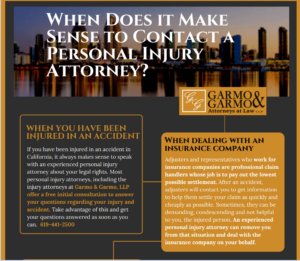
Click the image below to download our infographic on:
“When Does it Make Sense to Contact a Personal Injury Attorney?“